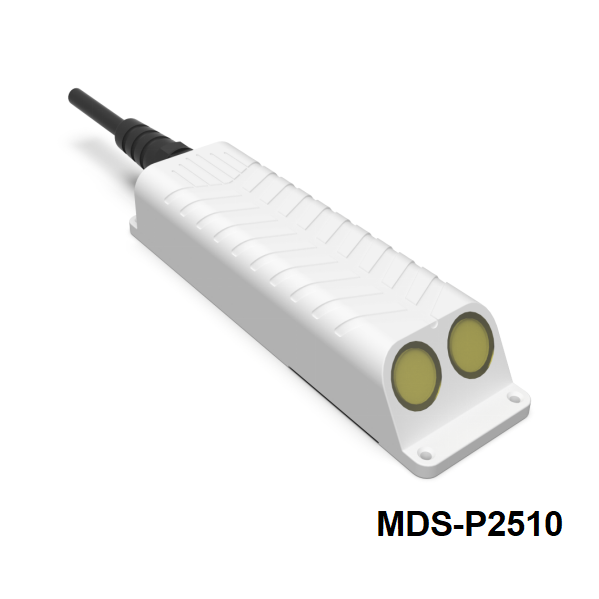
MDS-P2510 Doppler flow meter
Precautions
--Sensors need to avoid mud and collisions with objects such as stones. Grids should be installed in areas with abundant water and grass to prevent entanglement
--Sensor installation direction, the sensor emission surface needs to be installed in the upstream direction
--The narrowest 6 ° antenna beam angle reduces the impact of interference in the installation environment on the instrument, making installation more convenient
--The cable ventilation pipe is not difficult to break, which affects the water level measurement
--Try to do a good job in signal and power lightning protection
--If the sensor cable is to be extended, a 485 relay needs to be added. Power supply avoids interference from frequency converters
--The sensor has a blind spot for sound waves, so try to ensure that the sensor is below 20 centimeters underwater (false data may appear when the sensor is partially exposed to water or blocked by sludge, and the probability is very low. Usually, the data will show large values such as 2m/s or more. It is recommended that secondary developers shield large flow velocity values by water level, or in actual application scenarios where the water flow velocity is not so high, they can directly shield flow velocities greater than 2 meters)
| Power Supply | DC10-15V |
| Operating Current | 160-180mA |
| Sound Wave Frequency | 2MHZ |
| Blind Spot | 10 centimeters |
| Flow Rate Range | 0.021m/s~6.00m/s (customizable 12.00m/s) |
| Accuracy | 1.0% ± 1cm/s |
| Water Level | Range: 0.03m~10m (customizable 100m) |
| Accuracy: 0.3% ± 0.5cm | |
| Water Temperature | -10°C~60°C, Accuracy: ±1°C |
| Instantaneous Flow Range | 1L/s~99.99m3/s |
| Cumulative FlowRange | 0.1m3~999999m3 |
| Working Voltage | DC7.2V~24V |
 MDS-P2510 Doppler Flow Meter.pdf

 WhatsApp