Advantages of Online Dimethylformamide (DMF) Concentration Analyzers Based on Refractive Index Measurement in Industrial Processes
Introduction
Online concentration analyzers for Dimethylformamide (DMF)—typically utilizing the critical angle total internal reflection refractometry principle—offer significant advantages in processes such as synthetic leather manufacturing, chemical production, and pharmaceuticals.
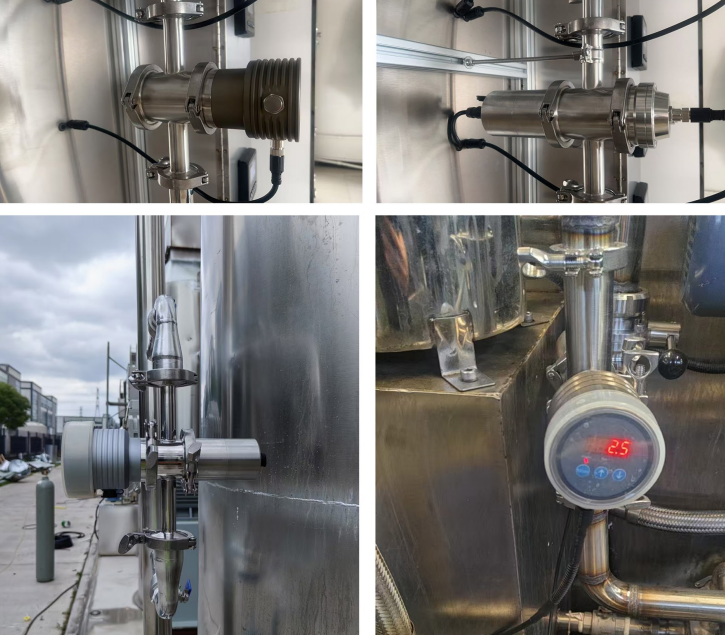
Key Advantages:
Real-Time Continuous Monitoring and Closed-Loop Control: The analyzer provides 24/7 uninterrupted concentration data output (commonly via 4-20mA or RS485 signals), eliminating manual sampling delays and human errors. This enables seamless integration with control systems for automatic adjustments.
Strong Anti-Interference Capability: Optical refractive index measurement is relatively insensitive to solution color, turbidity, viscosity, and typical fluctuations in flow rate or pressure, making it highly suitable for complex industrial fluids.
Fast Response and High Precision: Equipped with optical sensors and automatic temperature compensation, the device delivers rapid measurement responses with typical accuracy of around 0.1% (depending on the specific model and operating conditions).
Robust Structure and Low Maintenance: Industrial models are constructed with corrosion-resistant materials (e.g., stainless steel) and high-hardness optical prisms (e.g., sapphire). Certain models support automatic cleaning and direct installation in pipelines or reactors, significantly reducing routine maintenance frequency.
Enhanced Process Stability and Safety: Timely monitoring of solvent concentration helps ensure consistent product quality while minimizing occupational exposure and operational risks associated with frequent manual handling of DMF.
Note: The refractive index method is primarily suitable for binary or relatively fixed-component solution systems. If the system contains multiple solutes with similar refractive index changes, severe crystallization, or heavy scaling/wall adhesion, compensation or cleaning solutions must be evaluated based on specific operating conditions.
Previous: It's already the first one
Next: Precision Internal Flaw Detection: MADSUR MDS-UFD Digital Ultrasonic Flaw Detector Elevates Industrial NDT Standards

 WhatsApp