How Lake Water Quality Monitoring Buoys Enable Early Warning of Eutrophication and Cyanobacterial Blooms
Due to weak hydrodynamic flow, lakes are prone to nutrient accumulation, which can easily trigger eutrophication and subsequent cyanobacterial blooms (blue-green algae outbreaks). Traditional manual sampling is limited by low monitoring frequency, making it difficult to capture rapid fluctuations in water quality. By contrast, Lake Water Quality Monitoring Buoys provide long-term, continuous in-situ monitoring, delivering reliable data support for analyzing eutrophication trends, issuing early warnings for algal blooms, and enabling proactive water environment management.
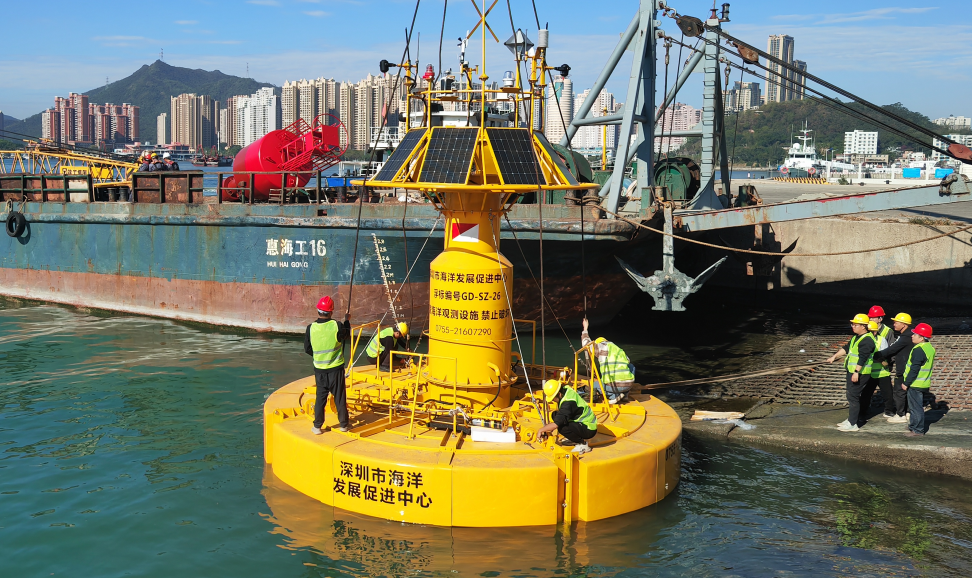
1. Continuous Tracking of Key Eutrophication Indicators
Equipped with multi-parameter sensors, monitoring buoys continuously collect data on critical indicators closely linked to eutrophication, building comprehensive long-term time-series datasets. This allows operators to track dynamic shifts in nutrient levels and physicochemical water parameters, identify gradual nutrient accumulation, and distinguish between internal nutrient release and external runoff inputs. Such continuous datasets eliminate the information gaps caused by intermittent manual sampling and provide a solid basis for assessing trophic states.
2. Capturing Early Signals of Cyanobacterial Proliferation
Cyanobacterial proliferation develops in distinct stages; before visible algal blooms form on the surface, key water quality indicators already exhibit regular, measurable shifts. Buoy monitoring systems continuously detect these early precursors while simultaneously recording environmental conditions such as water temperature and solar irradiance to identify optimal growth windows for algae. Compared to periodic manual patrols, automated buoys detect anomalies much earlier, advancing the early-warning timeline and preventing widespread outbreaks before they require costly emergency intervention.
3. Supporting Zonal Analysis and Risk Classification
Because water depth, flow velocity, and nutrient conditions vary significantly across different areas of a lake, deploying buoys at multiple locations establishes a spatial monitoring network. By comparing real-time data across different monitoring points, managers can identify high-risk zones, classify risk levels, and distinguish between localized algal aggregation and lake-wide threats. This supports differentiated management strategies, allowing authorities to prioritize high-risk zones and optimize resource allocation.
4. Providing Objective Basis for Remediation Evaluation
Following the implementation of pollution source control, ecological water diversion, or emergency mitigation measures, monitoring buoys provide continuous feedback on water quality changes. This directly reflects the effectiveness of interventions in curbing eutrophication and suppressing algal growth. Managers can dynamically adjust treatment plans based on real-time data to verify sustained efficacy, avoiding blind operations and enhancing the scientific rigor of lake governance.
5. Building a Long-Term Closed-Loop Early Warning System
Data from the monitoring buoys is integrated directly into a central management platform configured with tiered alarm thresholds. When indicators exceed normal ranges, automated alerts are pushed immediately to prompt rapid response from maintenance teams. By combining automated continuous monitoring with manual patrols and laboratory verification, authorities can establish a seamless "Monitoring – Early Warning – Mitigation – Evaluation" closed-loop management system, significantly reducing environmental risks caused by cyanobacterial blooms.
In summary, lake water quality monitoring buoys continuously track the progression of eutrophication, capture early signals of algal proliferation, and support risk zoning and remediation assessment. Serving as a routine sensing network for lakes, these stations help water authorities transition from passive emergency response to proactive prevention, driving sustainable, long-term eutrophication control.
Previous: Application Value of Online NIR Composition Analyzers in Closed-Loop Process Control
Next: Empowering Precision Airflow Control: Six Core Industry Applications of Air Flow Capture Hoods

 WhatsApp